Tax Season Isn’t a Windfall—It’s a Reset Button (If You Use It Right)
It’s that time of year again in Missoula. W-2s are landing in mailboxes, and for many renters across the Garden City, that upcoming tax refund check feels like the first time in months you can actually breathe.
The temptation is always there to treat it like “free money”—maybe a shopping spree at Southgate Mall, a trip out of town, or upgrading your gaming setup. But let’s be real about the economics of living here right now. Rent isn’t going down, and neither is the price of groceries on Reserve Street.
If you are relying on a vehicle that shakes when you hit 60 mph or struggles to start when the temperature drops below zero, blowing that refund is a missed opportunity. This isn’t just extra cash; it’s a reset button. Used correctly, your tax refund can lower your monthly overhead, repair your credit, and get you into a car that actually starts when you need it to.
Quick Checklist
- Audit Your Ride: Is your current car surviving another Missoula winter, or is it a money pit? Check repair receipts from the last 12 months.
- Check Credit Health: Know your score before you shop. A larger down payment can often overcome a lower score.
- Calculate Real Costs: Don’t just look at the sticker price; factor in insurance and fuel efficiency for city vs. mountain driving.
- Set a Hard Cap: Decide how much of your refund goes to the car vs. an emergency fund. Don’t spend $0 balance.
The “Windfall” Trap vs. The Strategic Reset
Psychologically, we treat tax refunds differently than our paychecks, often spending them more recklessly. Here is why you need to shift that mindset.
Behavioral economists call it “mental accounting.” Because the money comes in a lump sum separate from your wages, it feels like a bonus. In reality, it’s just your own money that the government held onto interest-free for a year. Spending it on consumable goods is the equivalent of working a month for free and then burning the paycheck.
For renters in Missoula, where the cost of living consumes a huge percentage of monthly income, liquidity is rare. Using this capital to fix a long-term problem—like an unreliable car or a high-interest auto loan—generates a return on investment that a new TV never will.
Think of it this way: If your current car costs you $200 a month in surprise repairs and poor gas mileage, using your refund to get into a reliable vehicle that saves you that $200 is effectively giving yourself a permanent raise.
- Avoid “lifestyle creep” purchases that depreciate instantly.
- Target “overhead reduction” purchases that lower monthly bills.
- View the refund as capital for stability, not entertainment.
How a Down Payment Changes the Math
A substantial down payment does more than just reduce the loan amount; it changes the entire structure of your financing.
When you walk onto a lot with $2,000 or $3,000 down from your tax refund, you instantly become a less risky borrower to banks. This is crucial if your credit score has taken a hit. A solid down payment can unlock lower interest rates, meaning you pay significantly less over the life of the loan.
Furthermore, it prevents you from being “upside down” (owing more than the car is worth) the moment you drive off the lot. In Missoula’s used car market, maintaining equity in your vehicle is your safety net. If you ever need to sell or trade it in later, having started with a strong down payment ensures you aren’t writing a check to get out of your car.
For example, putting $2,500 down on a $12,000 vehicle significantly drops your monthly obligation compared to zero down. That $50 or $80 difference per month adds up to nearly $1,000 a year—cash that stays in your pocket for rent or groceries.
- Lower Loan-to-Value (LTV) ratio improves approval odds.
- Reduces total interest paid over the loan term.
- Keeps monthly payments manageable for tight rental budgets.
Escaping the “Missoula Beater” Cycle
Cheap cars are expensive. It’s a paradox that keeps many Missoulians broke.
We’ve all seen them—or driven them. The $1,500 sedan that needs a new alternator in February, new tires in April, and a radiator in July. You keep fixing it because it’s “cheaper than a car payment,” but when you do the math, you’re often averaging $300+ a month in repairs, towing, and lost wages from missed shifts.
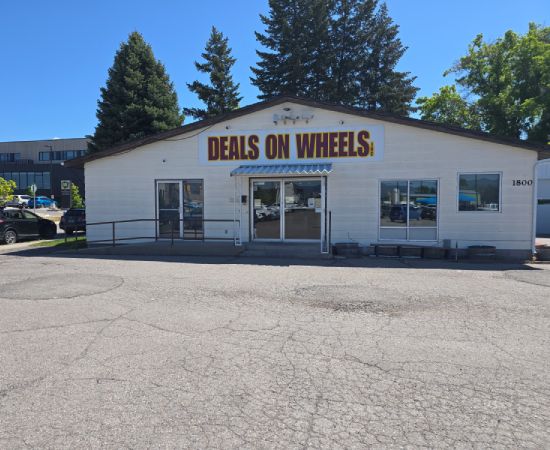
Using your tax refund to break this cycle is the smartest financial move a renter can make. A newer, reliable vehicle from Deals On Wheels might come with a payment, but it comes with predictability. You know exactly what leaves your account on the 1st of the month. You aren’t praying to the car gods every time you turn the key.
Reliability is an asset. Being able to get to work on time, every time, protects your income. In a city where public transit doesn’t cover every shift or neighborhood, your car is your livelihood.
- Predictable payments beat surprise repair bills.
- Newer vehicles offer better fuel efficiency for city driving.
- Safety features are non-negotiable on icy Montana roads.
The Local Factor: AWD and Winter Survival
Missoula isn’t Phoenix. Your tax refund strategy needs to account for the geography we live in.
It is easy to look at a sporty, rear-wheel-drive coupe and think it looks fun for the summer. But if you are renting in the Rattlesnake or commuting from Lolo, you know that October through April is a different story. A “Reset Button” purchase means buying for the worst conditions you face, not the best.
Investing your refund into an All-Wheel Drive (AWD) or 4WD vehicle isn’t a luxury here; it’s a safety necessity. While these vehicles hold their value better (meaning they cost a bit more upfront), your tax refund gives you the leverage to afford one.
Don’t get distracted by bells and whistles. Use your refund to secure traction and clearance. When the plows haven’t hit the side streets yet, you’ll be thankful you spent your refund on a Subaru or a truck rather than a sound system.
- Prioritize drivetrain (AWD/4WD) over cosmetic upgrades.
- Check tire condition immediately—don’t blow the refund before getting winter tires.
- Consider ground clearance for unplowed alleyways.
Make Your Move Before the Rush
Tax season is the busiest time of year for car dealerships in Missoula. Inventory moves fast. If you wait until April 14th, the best reliable vehicles will likely be gone.
Treat your refund with the respect it deserves. It’s a tool to build a more stable year for yourself. Come down to Deals On Wheels, let’s look at your budget, and find a car that makes your life easier, not harder.
Can I use my tax refund as a down payment before I actually receive the check?
Some dealerships offer “deferred down payment” programs or can start the paperwork while you wait for the deposit. It’s best to ask us directly at Deals On Wheels about current options.
How much of my refund should I put down on a car?
Ideally, aim for at least 10-20% of the car’s price. If your refund covers that, you’re in a great spot to get a lower interest rate and manageable monthly payments.
Does a larger down payment help if I have bad credit?
Absolutely. A significant down payment lowers the lender’s risk, which often allows them to approve loans for buyers with lower credit scores that might otherwise be declined.
What if my refund isn’t huge? Is it still worth it?
Yes. Even $500 or $1,000 down is better than zero. It covers taxes and fees upfront so you aren’t financing them, keeping your loan balance lower.
Should I buy a cheap cash car with my refund or finance a newer one?
While a cash car means no payments, a $3,000 car in Missoula is often a gamble. Financing a $10,000 car with a $3,000 down payment usually results in a much more reliable vehicle with a long life ahead of it.